

The Washington Post is covering this small randomized study.
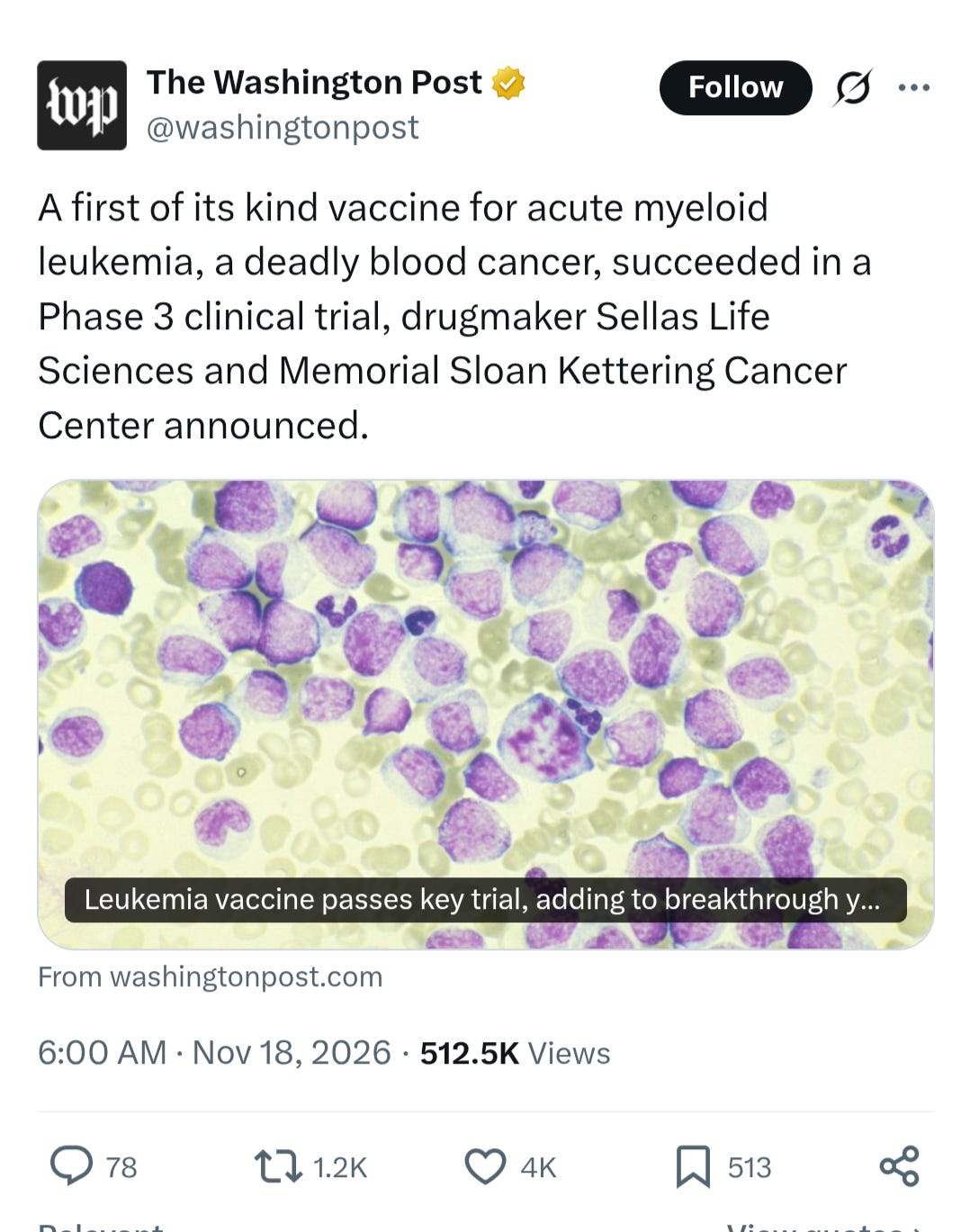
The trial is 122 people.
The vaccine is off the shelf. There's no personalization.
It's an old, peptide technology.
It's used in AML —one of the most challenging malignancy.
We are told it improves overall survival from 14.7 to 24 months which is massive. Truly massive.
The trial was supposed to be 140 people (according to at least one version of clinicaltrials.gov)
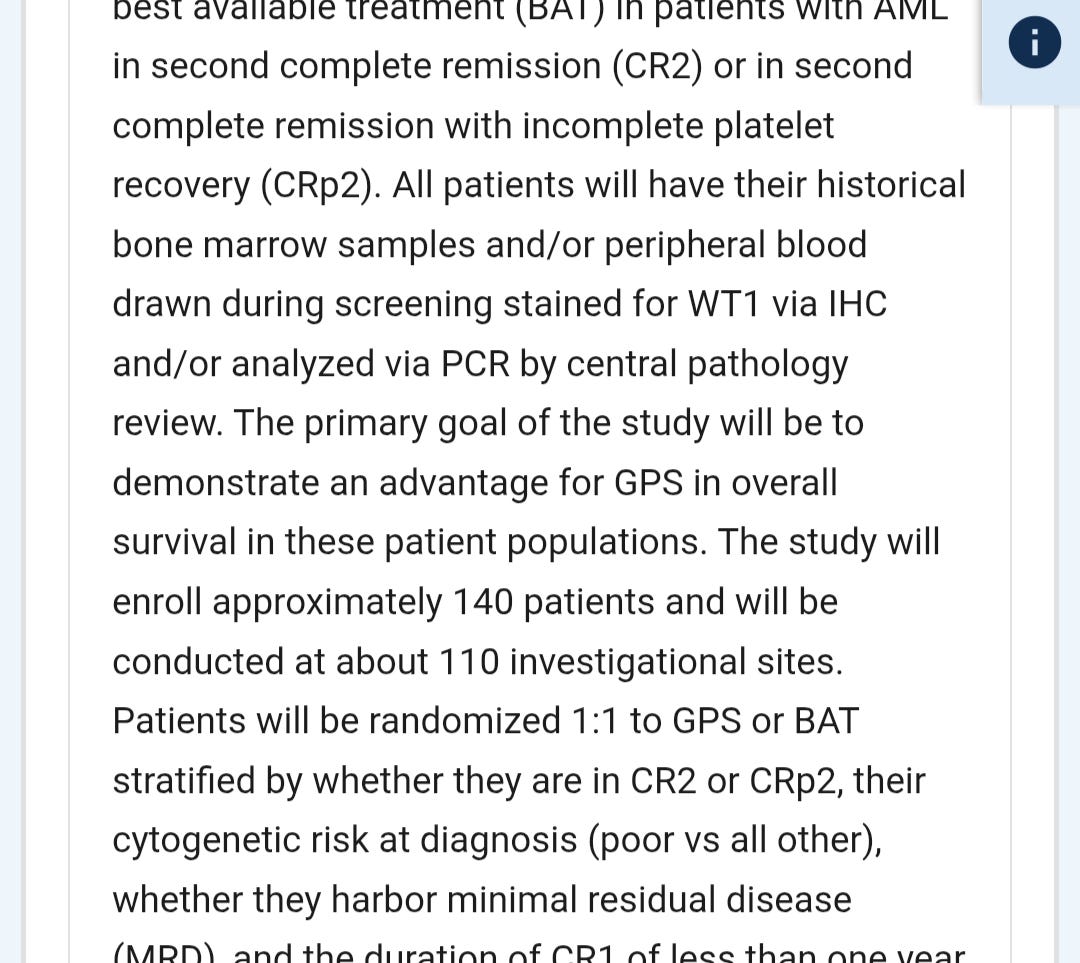
The single overall survival analysis was performed when 80 deaths occurred.
The trial was not blinded.
One option for the control arm was observation with hydroxyurea.
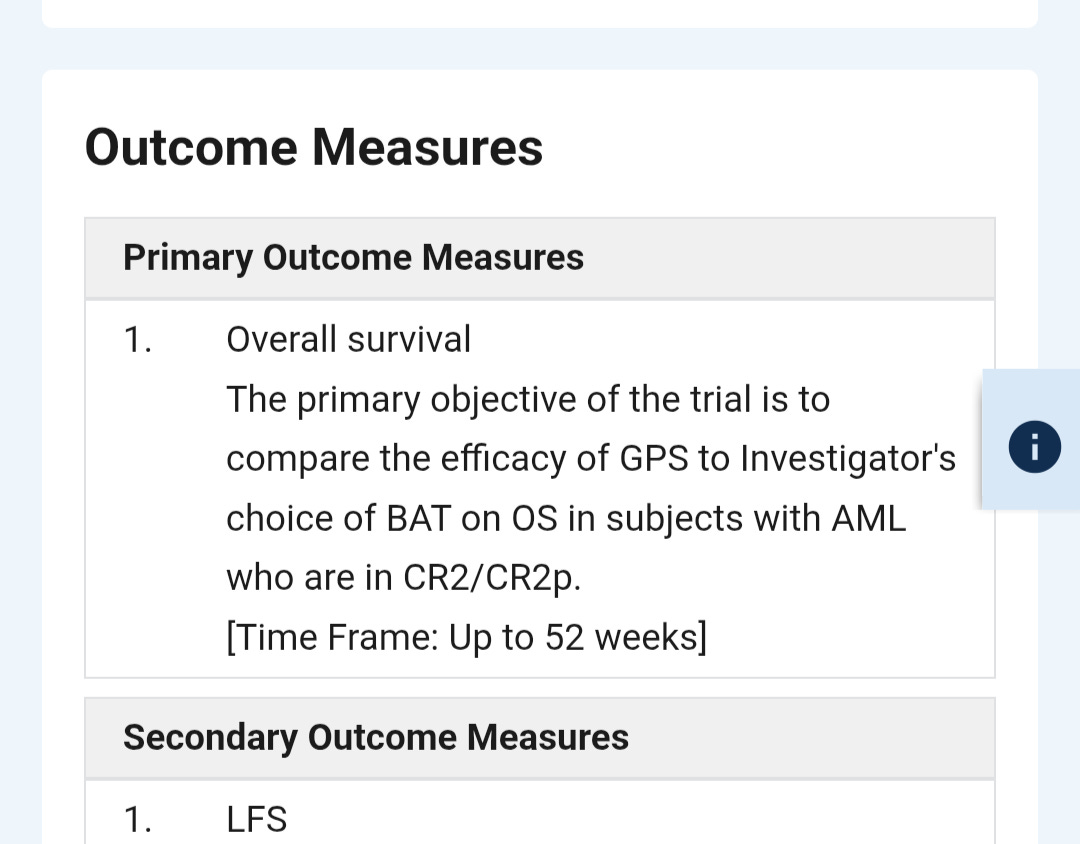
The overall survival was supposed to be followed for 52 weeks per the original clinicaltrials.gov posting.
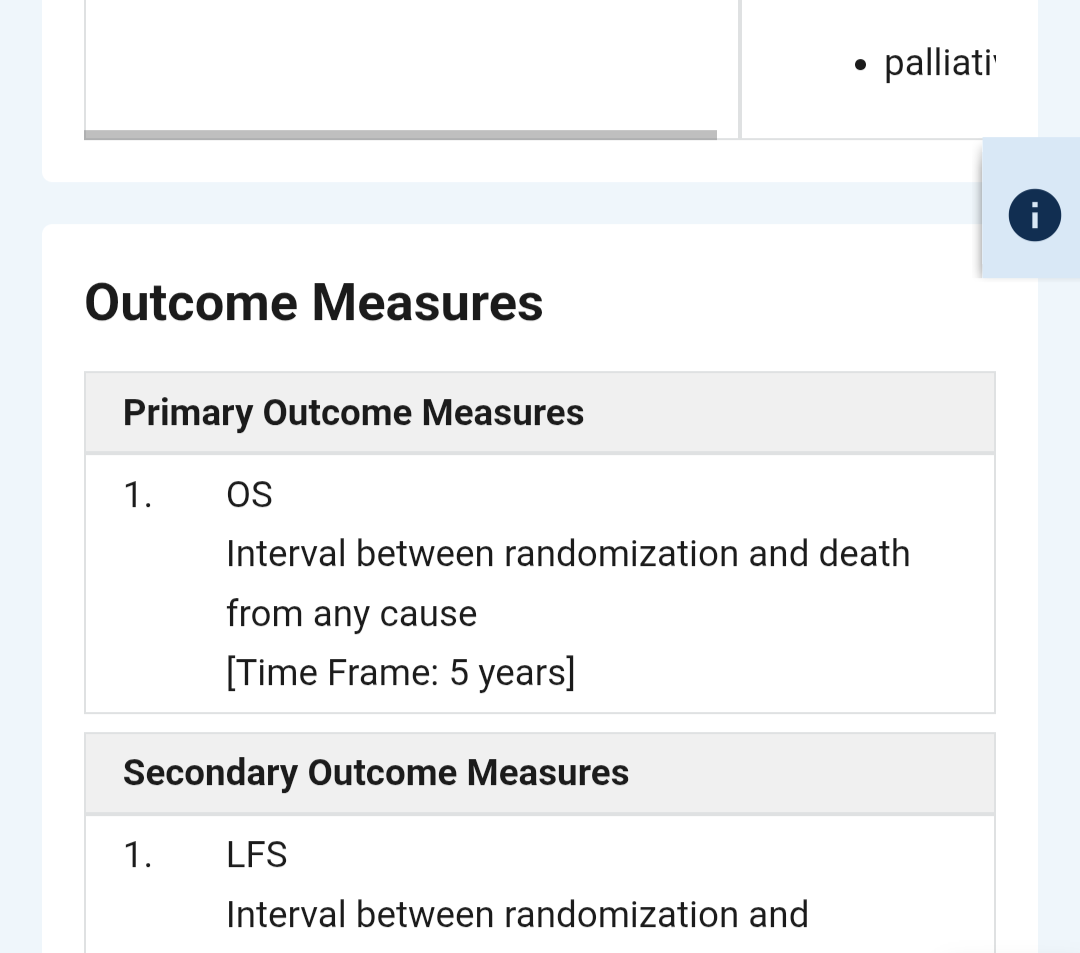
At some point on clinicaltrials.gov it changed to 5 years
I'm unable to locate all versions of the statistical analysis plan.
What's going on?
Any intelligent and honest oncologist or drug developer would be highly skeptical that this is a robust result. While I hope it is replicated in a future study, it may not be replicated in a larger randomized study with placebo control arm.
Why is this small randomized study making the mainstream news? That's a topic for a different post.
Optimism is great, critical appraisal is even better.
Question: "Why is this small randomized study making the mainstream news?"
Answer: Because they buy ads.
Asked and answered. NEXT!!!
Your point about the control arm is the one that keeps nagging at me. In a 122-person unblinded trial, observation with hydroxyurea as the comparator means the survival gap — 14.7 to 24 months — is doing a lot of work against a control that isn't really a treatment arm in the modern maintenance sense. Add the moving pieces you flag — the planned 140 shrinking to 122, a single overall-survival analysis at 80 deaths, and follow-up quietly stretched from 52 weeks to five years on the registry — and the headline number starts to look less like a result and more like a hypothesis waiting for a properly powered, placebo-controlled test. I hope it replicates; AML maintenance is exactly where an off-the-shelf peptide vaccine would be transformative if real. But the Washington Post treatment of a small open-label study as near-breakthrough is precisely the pattern that burns patients and clinicians alike when the confirmatory trial lands differently.