

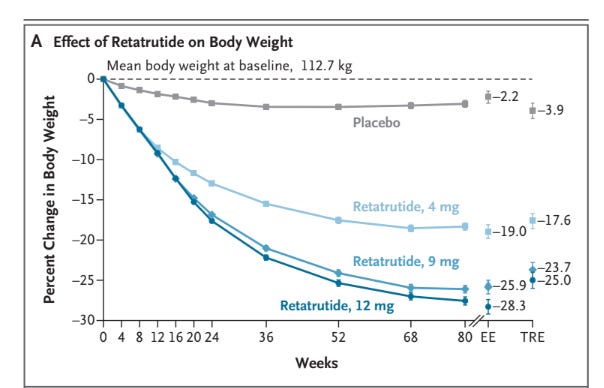
NEJM has published the retatrutide study— the weight loss is astonishing.
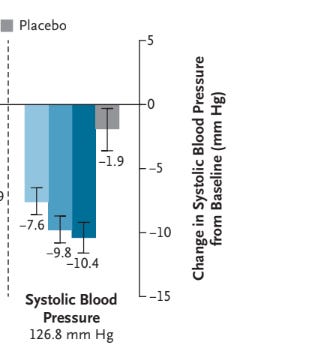
The blood pressure effects are massive
Literally, the only concerning signal is S22; Its amazing that despite the boatload of weight shed, and the plummeting BP, the HR is still elevated years later. (I am assuming the HR also includes the fact that ~half stop taking the drug due to too much weight loss & intolerance) So the elevated HR among those taking the product is probably 6 bpm higher.
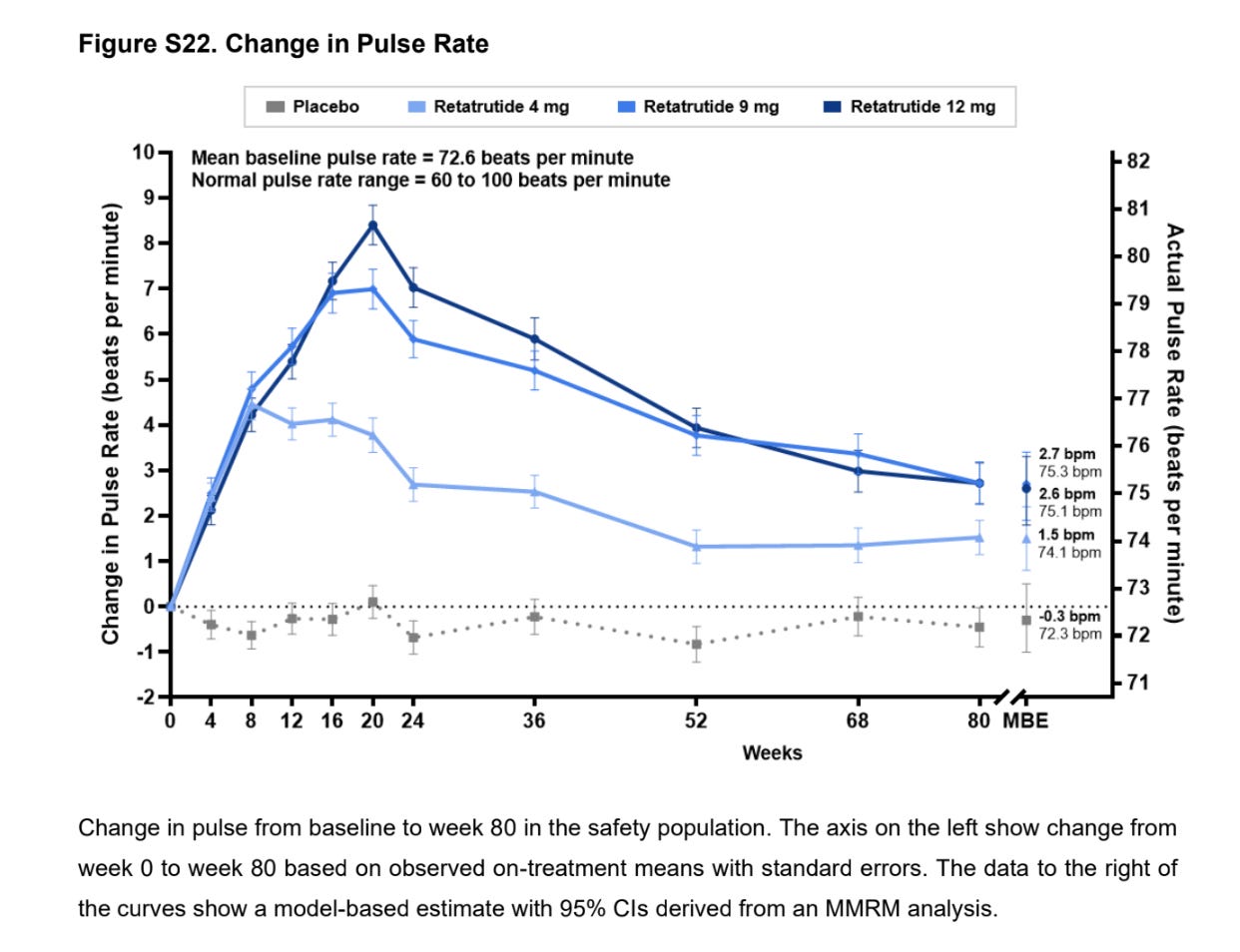
If I were a betting man, I would bet that these folks will live longer and better on Reta than placebo. Just because the benefit on BP and LDL and weight will far outweight the potential harm of faster HR. Consider:

The mean entry BMI is 40, and entry weight was 250 lbs.
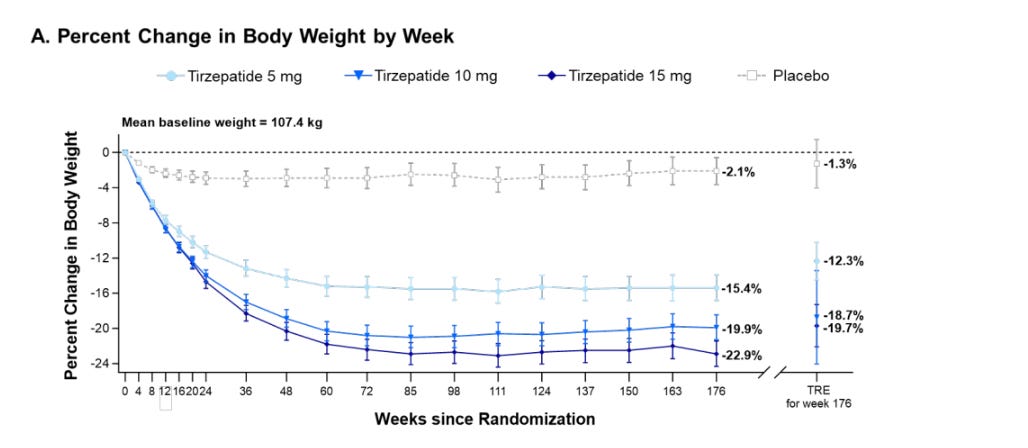
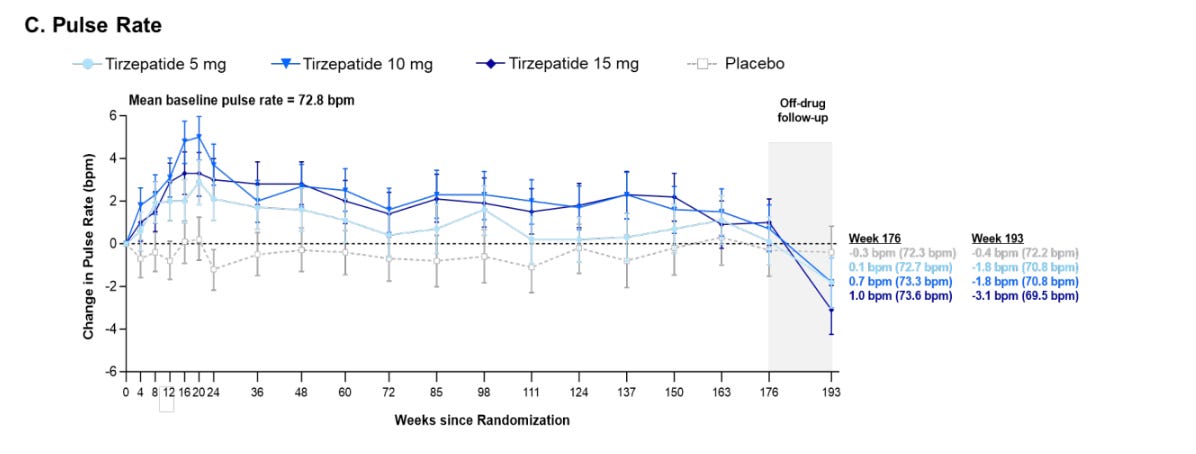
Now lets compare against tirepatide. Cross trial— i know— but slightly less weight loss, slightly less HR elevation
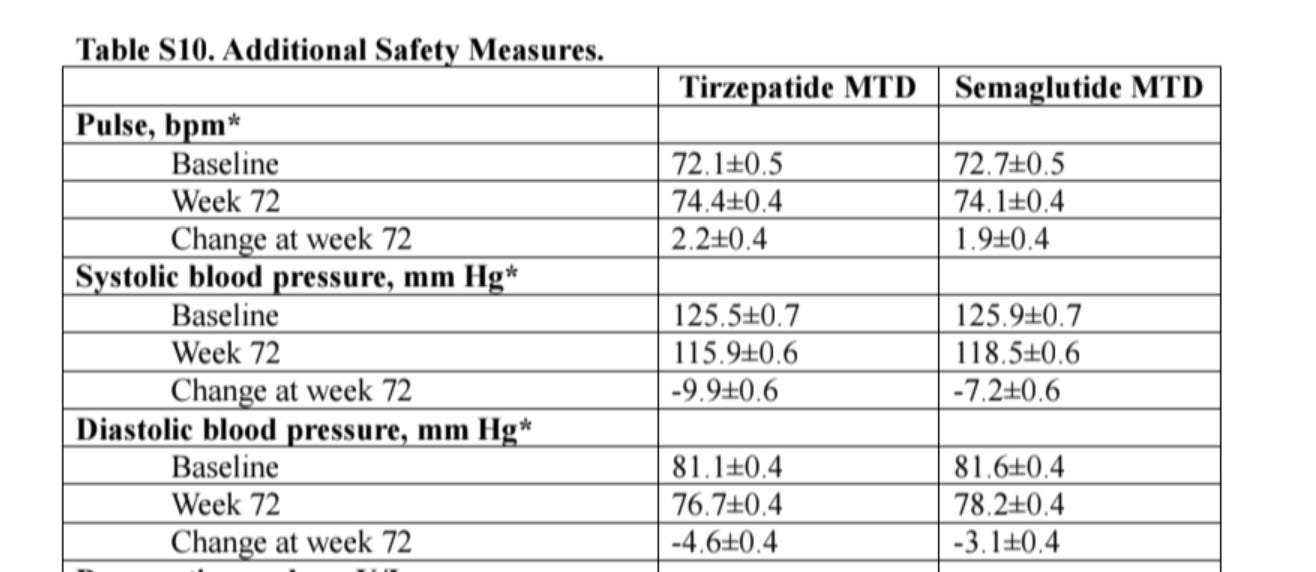
Now semaglutide, a little less HR elevation still, with less weight loss/ BP reduction
If you take an overweight 45 year old, should they start on high dose reta, low dose reta, tira, or sema, and what about an oral?
Which is the best in the long haul?
That’s the big clinical question for which we need a large, pragmatic, multi-arm, un-conflicted study.
We also need to know what happens when someone is 36 and their BMI is 26 and they start taking the product? This is already happening.
Finally, there are still the unknown unknowns— what happens after taking the medication for 15 years?
Only time will tell.
The Law of Unintended Consequences may of course make itself apparent in some unpleasant way a few years hence. We need only look at the Public Health campaign to lower salt intake. Important for a percentage of the population with heart failure, chronic kidney disease, and sodium responsive hypertension-(Gee it must be good for everyone went the logic). Turns out salt restricting people without a good indication causes many of them to eat more calories and gain weight. The campaign to “adaquately treat every patient’s pain”, came complete with government mandated patient feedback on how quickly and completely their pain was relieved, and this affected institutional reimbursement from Medicare and Medicaid via hospital quality assessments which were publicly available. Would you be surprised if that contributed to the over prescribing of narcotics and was a factor in the explosion of prescription drug addiction? And certainly we saw enormous societal damage during the COVID pandemic as the Law ran rampant.
See, “Clear and Present Thinking” on Substack: https://substack.com/@jeffreykocher/note/p-215268577?r=nf8t4&utm_medium=ios&utm_source=notes-share-action
I was actually in this study (in the lowest dose group which I only know because while experimental vs. placebo was blinded, dosing was not as we had to draw different amounts of fluid from the vial) and I don’t particularly remember having any elevated heart rate, but I definitely remember losing approximately 30% of my body weight in the span of a year (starting BMI roughly 37).
For whatever it’s worth, two pregnancies and four years later, and I have still kept off just over half of the weight I lost. I’m looking forward to using Retratrutide once more to finish losing all the weight I wanted to lose. From the weight I was at pre-study, I wanted to lose 40%, so I never quite got there before the study ended.