

I chuckled when I heard a recent proposal arguing that not only should we ban pre-med and medical student research, but the penalty should be jail time.
I share the sentiment, and have been making a similar argument for 10+ years. One of my early papers showed that medical school and early residency publications have no predictive value over who will have a research career (i.e. continue publishing in fellowship). Since then, others have confirmed and extended this finding.
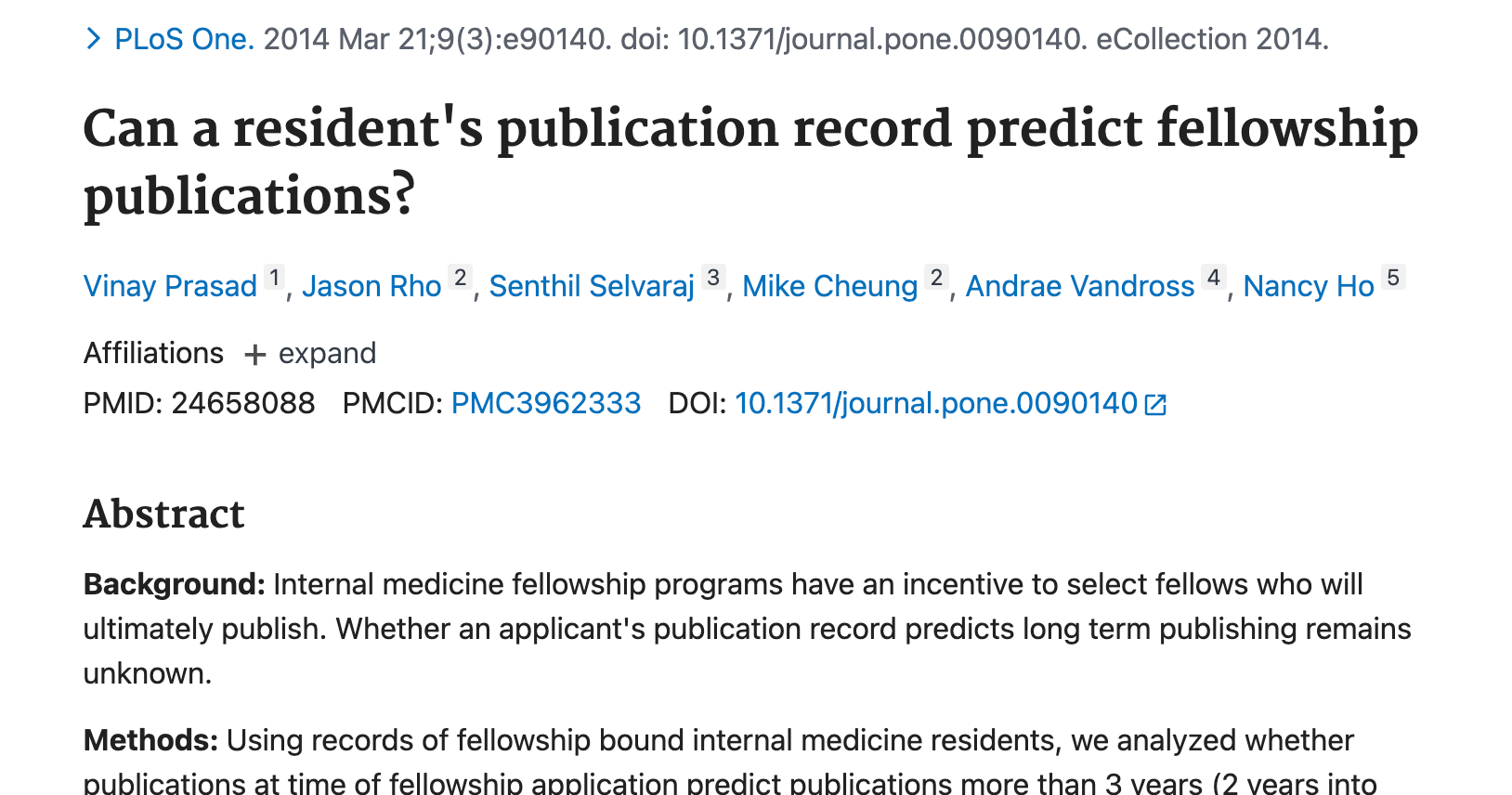
Of course, you can’t criminalize research, but the feeling is right. The bulk of this research is slop. It has no scientific value. It is not the best use of a student’s time. It is all part of the modern “arms race” to pick students— but it is unclear these capricious metrics means we get better candidates.
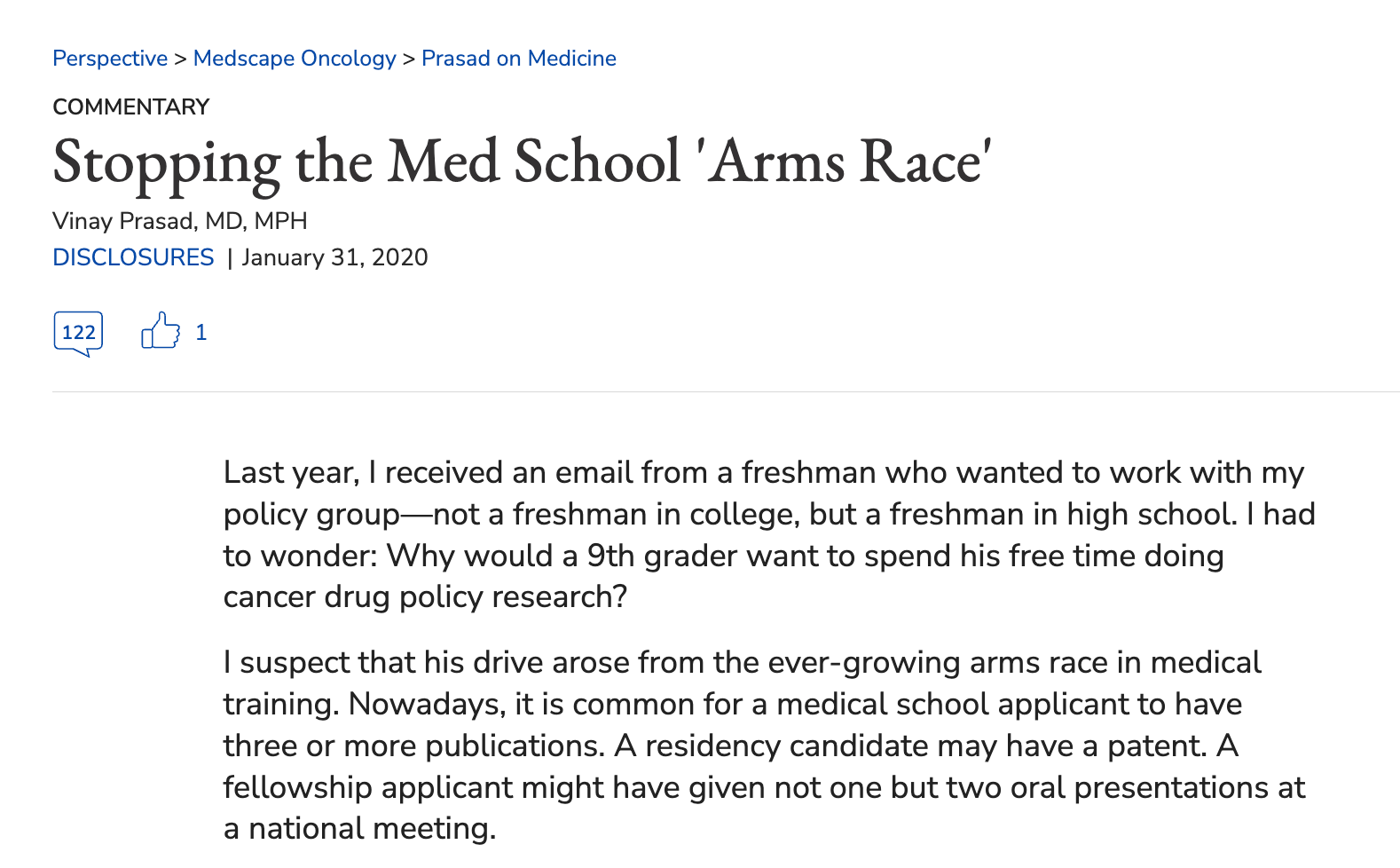
The reason students jump through the ‘useless research’ hoop is because the people on the committees that select them value the commodity. That’s the real failure— the leadership of admissions committees for medical school and residency programs.
Our paper from a decade ago showed that doing research in the past was not able to predict future research— meaning it was all for show and didn’t tell you who the budding scientists were. I assumed (naively) that it would lead programs to stop valuing these projects. I didn’t count on the fact that program leadership is numerically illiterate.
I joke— but it is also not a joke— it is amazing how little medical school and residency admissions folks know about the science of prediction. In fact, the Venn diagram of people interested in medical education and people who understand medical research has slim overlap— which is why medical admission decisions often appear closer to pseudoscience or the selection criteria for the Cambridge sociology department.
Some argue that doing bad research is the best way to understand how to read and critically appraise bad research. Nothing can be further from the truth. Cooking poorly does not help you become a restaurant reviewer. Killing houseplants does not teach you how to manage a farm. Watching a video lecture series on critical appraisal is a much better way to train students to understand and dissect research. If only we had one for free…. oh you are in luck.

Forgotten in all this debate is one unspoken assumption: the goal of medical school is to train doctors to take care of patients. If that remains the core goal— and I still think it is (for the time-being)— we have to prioritize that.
Of course, folks running labs will be disappointed to have fewer hands to help. Don’t worry about that— with the next batch of cuts to science funding, you won’t have reagents for the students to work with anyway.
Folks running retrospective chart review will be disappointed to have to pay for Claude subscription.
Folks doing qualitative research will have to fall back to just making things up.
(Ok, these are jokes, don’t @ me)
Jokes aside, I have been lucky to have worked with amazing pre-med and med students. Because my research has been challenging of conventional, entrenched interests, I have almost always gotten students and residents who had read and processed a lot and wanted to do the work for the sake of the work.
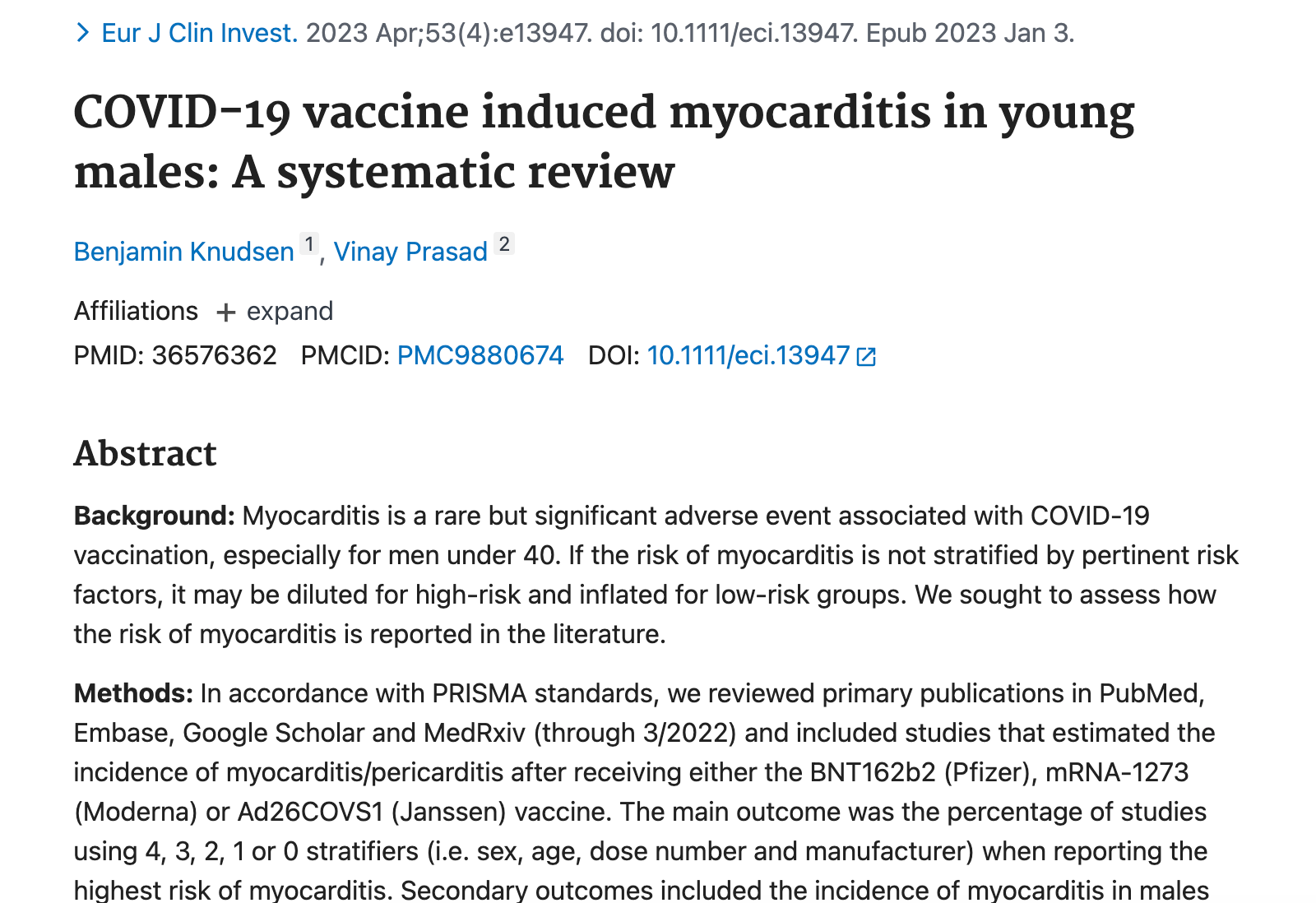
One student—Ben Knudsen—comes to mind. He, like me, was frustrated by COVID-19 policy that was deranged, illogical, and unscientific. He read voraciously and found me. Together we published research that challenged the CDC and “the science” himself— Dr Fauci. Ben was (and is) brilliant, and he did this work not to check a box, and probably at great career risk— because it was the right thing to do and he believed in it. In many ways, he inspired me to be braver and more outspoken— because he had much more to lose than I did, and yet he felt compelled to do the right thing.
I know it is possible for students to do work that actually matters, and for the right reasons. I just think the majority of medical student research is not this. If we deprioritized it in admissions— I am not worried about folks like Ben— They would still do it— because they were never checking a box.
The same is true for all types of research. There are some people who work in lab who actually want to do that. There are some people who actually do good chart review work. By removing the incentive, you will retain the folks who do it because they aren’t do it for points.
For these reasons, I am supportive of the fact that we should not value these metrics early in one’s career. For Cambridge professors of sociology— however— I do think research matters.
PS: I picked Ben, but this applies to probably all of the people who are my co-authors— you know who you are— I am fully aware that given the nature of the topics we discussed and papers we wrote, you weren’t checking boxes.
889906 Good evening, thank you for another excellent critical essay. I guess I’m an aberration. Today is my 82nd birthday. I just returned from a very enjoyable and I think productive day at the office. I completed two research projects before medical school: one during the summer before I started medical school working as a lab assistant cutting off hundreds of innocent mice heads and removing the caudate nucleus of hundreds more rats as part of the basic research to assay brain amines which ultimately resulted in the production of l-dopa to treat Parkinson’s disease. The second project was aimed at trying to determine if there was decreased resistance to respiratory infection in Navy recruits given the stress of Boot Camp. Also another fairly successful project demonstrating how stress decreases our immune response. That’s it. No further research. From that day forward i.e. approximately 1966, I felt that most research done by premed, Med students and post grads is borderline worthless. And, perish, the thought, I did the research because I needed the money provided by these part-time jobs;I was already admitted to medical school. Now I have read that this busy work is done simply to get it in to medical school. What a waste of time and money. During my medical school interview to Loyola Stritch in Chicago, I think my answer to the question: “why do I want to be a doctor?” is what got me in. I stated I think I have the ability to assimilate information, the ability to physically perform the job, and the great desire to do something productive with my life, helping people with problems they can’t get through without my help. Medicine has been a great joy and continues to be so. No burnout problems but also no corporate entity is telling me what to do.
Thank you for your obstinate persistence in the pursuit of the acceptance of reality.
Vinay, All completely correct. But the real elephant in the room is the utterly broken admissions process. As one involved (shrieking the entire time) in the process for years, the migration from those who have the mental ability and the desire to do good to those most distinguished by demographics and "distance traveled" has been devastating. Of course everything moved to pass/fail (including boards) because the futility of admitting those who will never be qualified to be decent physicians immediately became obvious. The rest the powers-that-be hope gets lost in letting AI take care of patients for those who cannot. (Or something...I have never figured it out.)
Of course, there are marvelous students that get admitted as well. But in some schools (including some well known to you) it is a struggle to get the best admitted because they "have not slept in their trunks". And the system is designed to make sure that no one (other than faculty at the training institution) can figure out who are the stars and who are those who should never have been admitted. I advise all my friends to not see a doctor under 50. Not because there are not good ones under that age (because there are) but because my friends are likely in a position not to be able to tell and with no way to find out.
So the changes in admission need to go far beyond the ridiculous "papers to show I'm really cool" motif. They need to hark back to the whole point: find those with the mental ability to handle something as integrated and multifactorial and complex as medicine, match it with a desire to actually help people, and combine that with a willingness to be a professional -- which means hours way beyond "work/life balance" allows. We have a long ways to go to repair something that used to work quite well. Fixing the research thing is far from the first thing to be done. But any contribution will be good.