

Many physicians don't understand clinical trial ethics. Trials aren’t automatically unethical if you personally believe an intervention works. Instead, there are a series of questions you should ask. In the case of hep B, it hinges on this one:
What is the correct control arm?
An ethical trial randomizes participants to the best available standard of care versus an intervention you think might possible improve things. That intervention could be on top of the best standard of care, or in leu of it.
Many trials meant to inform the US practice are unethical because the control arm is something we have not done in the US for quite some time— a standard that was already beaten. This is the norm in oncology, where it is much easier to be a dilapidated and antiquated treatment then the best standard of care. We documented 17% of FDA pivotal studies used such an unethical control arm (Hilal, Prasad, JAMA Onc).
Other trials are conducted in low and middle income countries, and meant to understand the impact of therapies in those countries. For instance, you can randomize participants in sub-Saharan Africa to a mosquito net or no mosquito net and then measure malaria. That's because (prior to your study) the current standard of care was not to have a mosquito net, and you are asking whether or not it provides a benefit. In fact, at least 20 of these studies have been conducted and they work. But it was also possible they didn't work. Maybe people wouldn't go under them enough. The trials settled the question.
Randomized trials are particularly important for bitter and divided topics. If half of doctors think stenting stable coronary lesions saves lives, and the other half vehemently disagree, running a randomized controlled trial is of tremendous value.
On matters of public health, we unfortunately have to deal with a group of ignorant zealots. These are people who believe that they know what works based on mechanistic science and low quality observational studies. They know, for instance, that HEPA filters would save lives if we just installed them broadly. They know that cloth masking a 2-year-old saves lives. They often “know” these things with religious fervor.
When it comes to hep B vaccines, there are many important questions.
For the US: there has never been a randomized controlled trial that gives neonates, whose mother tests negative for hepatitis B while pregnant, and who are at low risk (i.e. not an IV drug user), a. Hepatitis B. vaccine on day zero versus delaying that vaccine by 2 months, or 10 years.
Such a randomized study would be imminently important in the United States, where this issue is heavily debated, and neither side has gold standard evidence, but the zealotry side uses bizarre arguments. Before we did universal day 0 shots, hep b killed x number.
Ok, sure, before firefighters poured water on a burning building, it was on fire, but now that it has stopped, we might ask if we can install a sprinkler system and turn off the hoses.
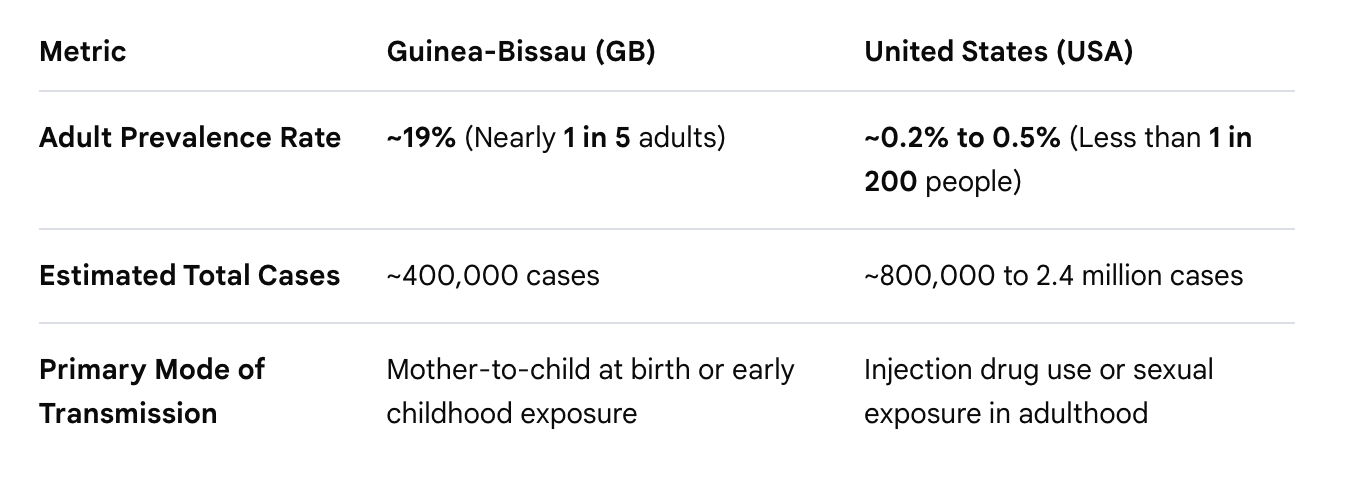
Researchers from Denmark however, are interested in a different question. In the GB, hep B vaccination at birth is not universally done. Instead they do it at 6 wks, 10 wks, etc. They want to randomize infants to having this added at birth or usual care. They will measure all cause mortality. In the absence of the study GB won’t launch universal hep B vaccination till 2028.
It appears the trial is ethical, feasible, practical and would be quite useful. GB has more hepatitis than the US, if the trial will show net benefit anywhere it will be there. If it fails to show net benefit there, or if there is net harm, then the US’s pre 2025 policy would be certainly net harmful.
If you ask me, I think running the trial in the US would actually be the better trial. It would more accurately impact US thinking and practice. I would be the US study is negative — i.e. totally fine, and probably better to omit Day 0 hep B if the mother is low risk and screens negative.
The GB trial is more uncertain. I suspect it may even give a favorable outcome, but I don’t know for sure. Yet, that’s why we run randomized studies.
so many of us recoil from any mention of "vaccines": and particularly to do with the US; given the 40 yr protection granted to manufacturers; of absolute protection from being sued; I found the first chapter of "Vaccines, Amen" particularly stark; and I would say very focused and helpful, for what I call my understanding.
Some character called Poltkin who seems to believe that giving any preparation the title of "vaccine" must automatically confer on it unique and extraordinary powers; and therefore it is automatically exempt from any scrutiny or evaluation. He seemed to see that as just and right, in the way high priests of the temple could feel a profound entitlement to whatever they wished.
Aaron Siri talks of interviewing Poltkin; a deposition; reading out to him that the evaluation of HepB to newborns in the US; was as he said it a deep and thorough 5 day evaluation: full stop. Nothing further, ever more;
And Plotkin seemed to feel that was entirely fine and dandy; and that a group of individuals "make" these agents; get rewarded by drug companies; then sit on "independent" committees that evaluate; the wares that they and their chums have made;
and these type of committees have the moniker applied to them of being comprised of "experts" and "independent"; the endless misuse of the english language.
For a standard drug; (meaning a drug that the company can be sued for); great care is taken before registration; (Siri suggests a several-year process); for a new jab, go as fast as possible; do as little study as possible; there are no worries; your mates are bound to approve whatever you have schemed up; register as fast as possible; once across the finish line of registration, it seems you are guaranteed lifelong immunity; fair's fair, ain't it?