

Observational nutritional epidemiology is competing for the lowest value field of science. It's riddled with measurement error. People don't faithfully report what they consume. It's plagued by multiple hypothesis testing. Lack of pre-registration. It's notorious for one day concluding eggs are bad, and the next day concluding they're good.
Long before there was AI slop, nutritional epi was the original slop. So I find it surprising that the New York Times has decided that the king of observational nutritional epidemiology is the wrongful victim of science being defunded.
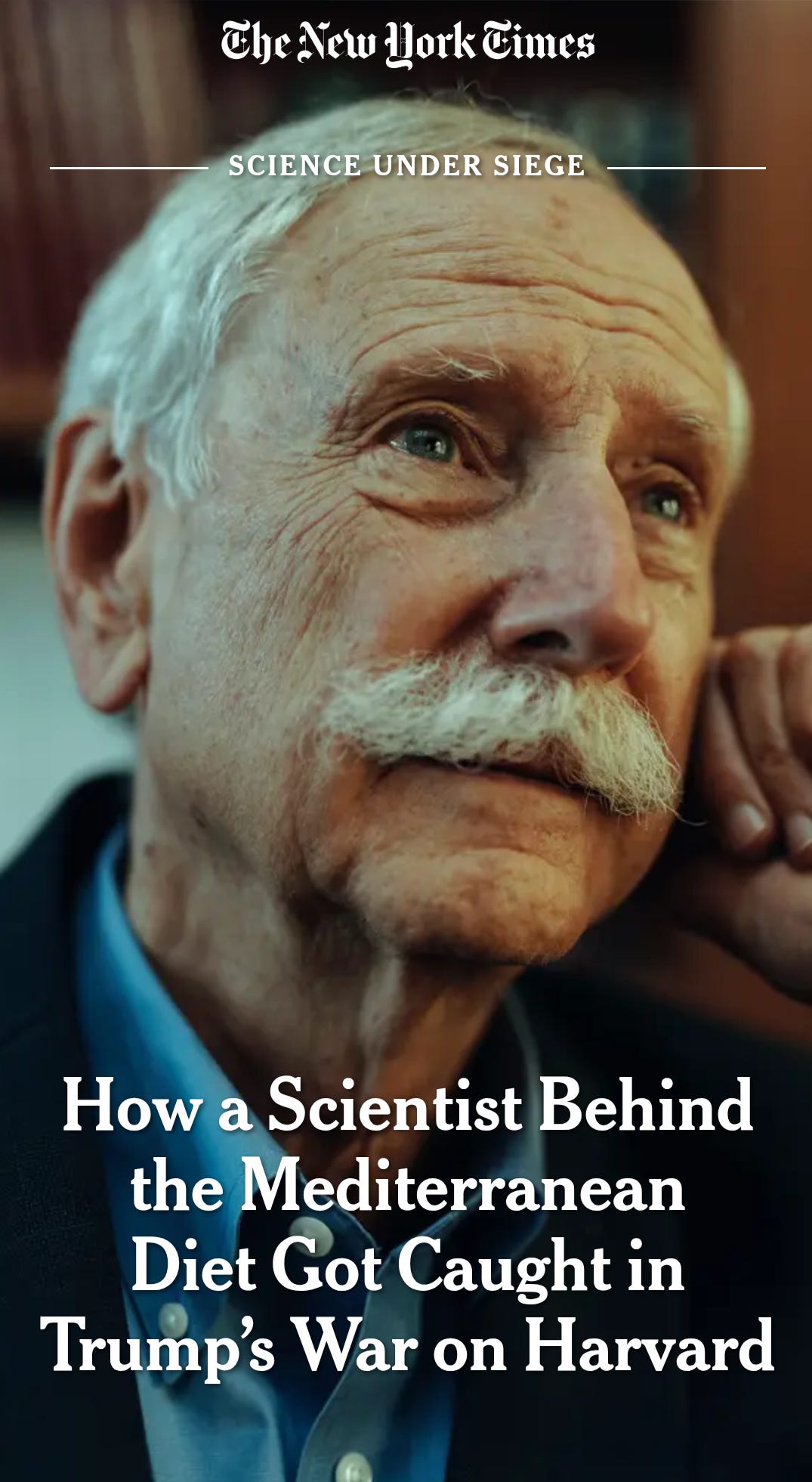
Following tens of thousands of people and having them fill out food, frequency, questionnaires and trying to link differences in nut consumption to all cause mortality is a fool's errand.
All of the money spent on this would be better served by picking a tiny handful of questions and answering them with the study design that can lead to causal conclusions: the randomized control trial.
But that would ruin the business model for the Harvard nutritional epidemiology cabal. They have dozens of staff who have been living off taxpayer money for decades.
One popular political position is to fund anything that calls itself science, as much as it wants, for as long as it wants with no accountability. The other popular position is to defund science in a capricious manner.
I prefer a middle ground. Defund, bad science and fund more good science.
A simple way to get started would be to select 50 basic science experiments at each of the top universities and try to replicate them. Universities in the bottom quartile of replication rate should face serious financial penalties. This will immediately wake up administrators towards the need to ensure that science with that University seal of approval is properly vetted. Instead, the current status quo is to exaggerate claims to deceive donors into giving more money.
Observational research taught us that smoking causes lung cancer. The odds ratio is massive. The dose response is clear. You can prove it in a cohort of very similar people, example only physicians in America.
But we're never going to learn the optimal number of blueberries to eat, to have, cups of coffee to have, from observational studies. The effect sizes are too small. The malleability of the study design is too great.
Walter Willet has made a career off such nutritional epidemiology studies. I see no problem with it being defunded.
That money would be better spent on a non-conflicted randomized control trial's agenda.
Vinay, Your usual good work. Once again, you deprecate your good work by not having a copy editor. I have volunteered for years to do this for you, but someone needs to do it. I know you never read comments from anyone, but I will still put it out here because it is true and, I think, important for you to achieve maximum impact. R
well said Vinay; these are the creatures wishing to push carbs on everyone; their crazed methodology of rummaging through chicken entrails to find wisdom; which they signally fail to do