

There is a new essay in the New England Journal of Medicine— That's actually a real journal-- that explains how AI made the most amazing diagnosis… functional dyspepsia. Is this something to be celebrated? Worthy of being published in a journal?
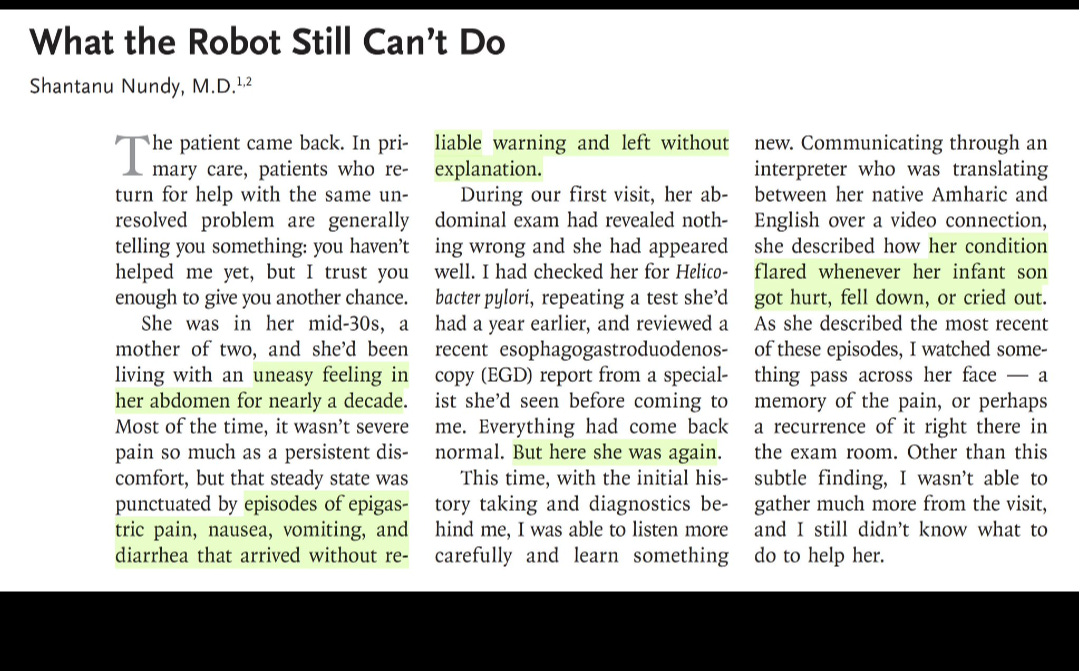
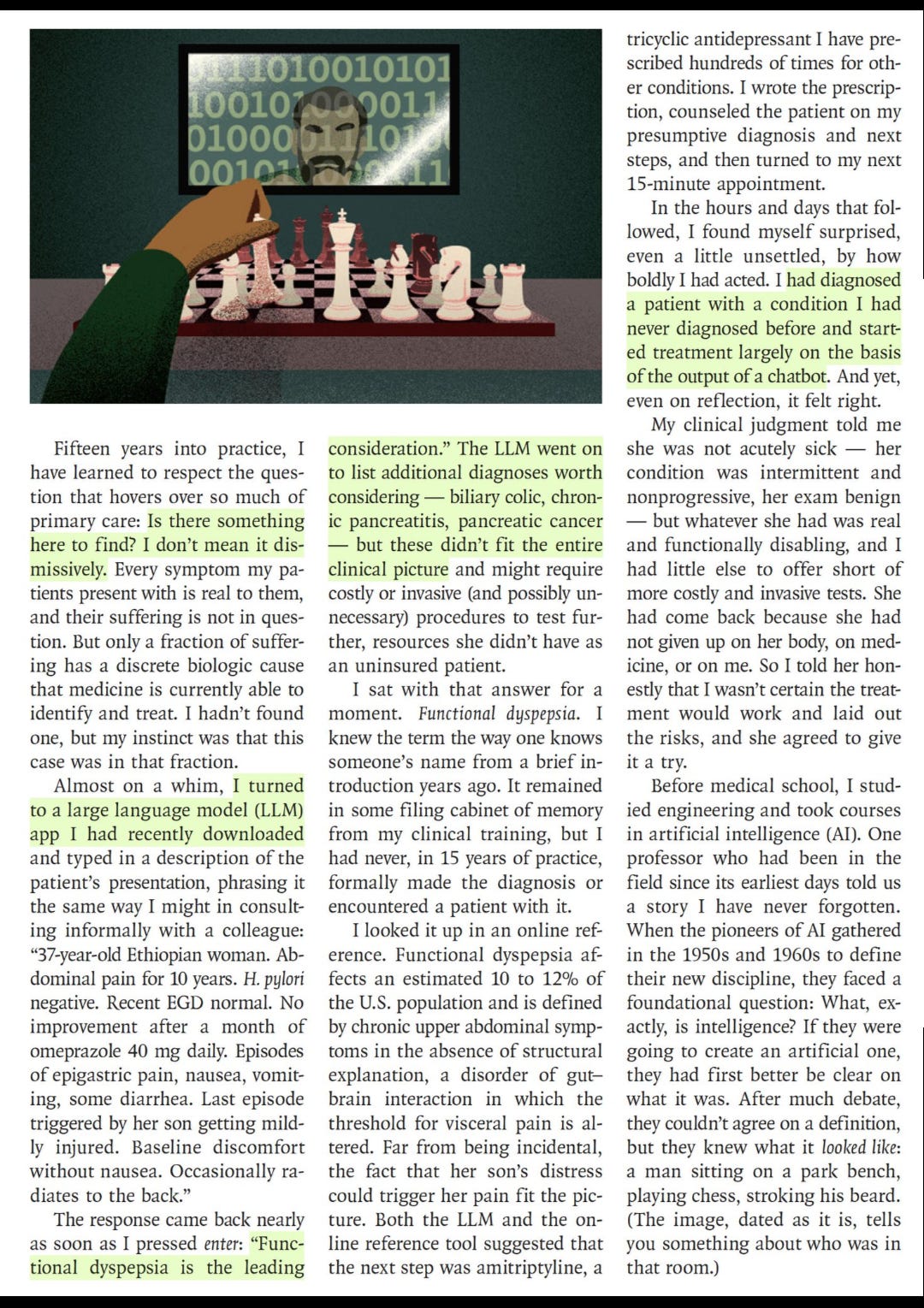
Imagine you have no medical knowledge. You didn't go to medical school. Maybe you flunked out of high school, but you do have some basic common sense.
If someone says they have stomach problems that act up every time something negative happens to their kid. I have pain, nausea and diarrhea if my kid falls, get hurts or cry.
What do you think it is?
Do you think it's a parasite? How would the parasite know to act up at the precise moment when your kid is in distress.
Do you think it's a hole in the lining of the stomach? Again, why does it cause problems when your kid hurts but not otherwise.
Could it be a congenital abnormality? A blood vessel that burst open? Cancer?
Or is it just anxiety, a case of the nerves, mind over body…
Even someone who failed school would likely conclude that the diagnosis is not related to something biological, but rather something psychological or mental.
Functional dyspepsia has a formal definition but that's a consensus definition that's essentially invented. It basically means this is something psychological.
Prescribing a TCA is not a magic bullet. Even placebo has a huge effect size here and it's not clear TCA even works.
“The Functional Dyspepsia Treatment Trial (FDTT) published in Gastroenterology evaluated 292 non-depressed patients over 10 weeks. Overall, 53% of patients taking amitriptyline (50 mg) reported adequate symptom relief, compared to 40% on placebo and 38% on the SSRI escitalopram”
If I were betting, if you reran the randomized study with a fourth arm of active placebo— a placebo that contains a hint of metallic taste or dry mouth then that would also perform the same as amitriptyline, a medicine whose side effects may unblind it to many users.
I guess I find it a low bar for AI to solve this case, and I am surprised the doctor didn't know the diagnosis. I am also surprised NEJM published the case without appropriate balance.
I am bullish on AI. I think it will be better than many doctors. I just hope we also bring our A game. I would find it sad if we used the most powerful thinking machine ever created to diagnose poison ivy, fibromyalgia or a case of getting older.
I'm heartened to see someone else expressing scepticism for antidepressants that haven't been tested against active placebos.
I get that same nausea when my stocks crater.